Face Cord vs Full Cord: What You're Really Buying
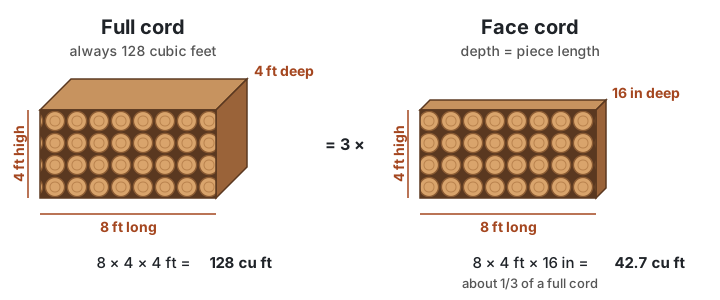
A full cord is a fixed amount: a tightly stacked pile of 128 cubic feet, usually 4 ft high × 8 ft long × 4 ft deep.
A face cord is not fixed. It is one 4 ft × 8 ft face of wood, but its depth is just the length of the pieces. Sellers also call it a rick, rank, or stove cord. Because pieces are usually 12 to 24 inches long, a face cord is always smaller than a full cord — often much smaller.
Quick conversion table
| Piece length | One face cord holds | Face cords in a full cord |
|---|---|---|
| 12 in | 32 cu ft (1/4 cord) | 4 |
| 16 in | 42.7 cu ft (1/3 cord) | 3 |
| 18 in | 48 cu ft (3/8 cord) | 2.67 |
| 20 in | 53.3 cu ft (5/12 cord) | 2.4 |
| 24 in | 64 cu ft (1/2 cord) | 2 |
The math: face cord in cubic feet = 4 × 8 × (piece length in inches ÷ 12).
Why this matters for price
"$150 a face cord" sounds cheaper than "$375 a cord". With 16-inch pieces, though, three face cords make a full cord — so the face cord deal is really $450 per cord. Always convert to price per full cord before comparing. The cord calculator does this for you.
Before you buy
- Ask the seller for the stack dimensions and piece length, not just the unit name.
- Ask whether the wood is seasoned and when it was split.
- Rules differ by state. Connecticut, for example, requires fireplace and stove wood to be sold only by the cord, fractions of a cord or cubic meters, and says terms such as "face cord," "rack," "pile" and "truckload" shall not be used (Connecticut Department of Consumer Protection). Your state's weights and measures office can tell you what applies where you live.